

Blog
What we're thinking about

SIX MWM Results Seminar 2026 highlights
SIX Mobile Work Machines (SIX MWM) is an industry & research cluster with the aim of making Finland the best place for mobile work machine development. They held the yearly results seminar a couple of weeks ago, and Digisalix, a proud partner, was there too. Here are some highlights from the meeting. At the beginning

Meet Erkan, our perception engineer
As a perception engineer, Erkan helps machines be aware of their surroundings. The real world is a messy place, and someone has to teach those poor wires-for-brains about noise and the edge cases that tidy theory never quite covers. Hard problems drew him to Digisalix, but the name reminded him of home, too. He is
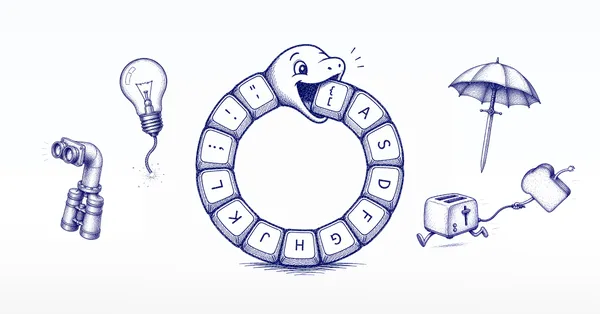
LLMs are brilliant brainstorming partners. But when it is time to execute, start over.
Key takeaway: brainstorm in one chat, execute in another. Humans use conversation to clarify ideas, test assumptions, and find better options. That is one reason chatting with AI feels so natural. It matches how we already think and work, and often it is genuinely useful. Sometimes those chats become infuriatingly cumbersome. A conversation that starts

Cultivating Future Algorithmic Talent: Why Digisalix Sponsors BOI
Every April, some of the sharpest young programmers in the Baltic region sit down for two days to solve problems that many professionals wouldn't finish in a week. That's the Baltic Olympiad in Informatics — a prestigious competition that's been running for three decades, drawing the best secondary school programmers from across the Baltic Sea
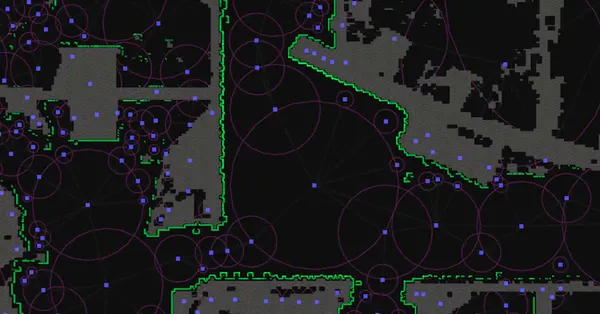
We Built a Drone Swarm Exploration Demo
Most of our work at Digisalix never makes it to a public slide deck – and that's by design. We work with R&D teams on problems that are either confidential, deeply embedded in internal systems, or simply not very visual by nature. The results are there, running in the background, doing their job. Quietly. But

Welcome Aleksi
As we grow, bringing in sharp minds who raise the bar in algorithmic thinking is something we are proud of. We've been enjoying Aleksi's company for a month now, and it felt like the right time to introduce him to the world — so we sat down by the imaginary fireplace for a chat. Welcome

Summer Intern 2026 – Position Filled
The trainee position for summer 2026 has now been filled. Thanks to everyone who applied. See you next year? If you're passionate about mathematics, algorithms, and programming, we might have the perfect internship for you in 2027. The work is challenging, and you'll be trusted to handle it. We're looking for someone with a desire to

HIRED: Math-loving senior software developers for a full-time position
Digisalix is still young and small, but our founders have built and exited companies earlier in their careers. We tackle challenges involving maths, algorithms, and machine learning to craft neatly packaged software for our customers' specific needs. We've optimised cargo packaging, planned routes for autonomous vehicles, and planned tasks for robots, among other things. With

Trip report: International Mathematics Competition
Last month, our trainee Sampo Siitonen had the chance to compete against some of the brightest young minds in mathematics. The occasion was the International Mathematics Competition (IMC) for undergraduate students, held in Bulgaria from July 28 to August 3. Here are Sampo's thoughts on the experience: "Although the IMC is an individual competition, I

Meet Sampo – Yet another Maths Olympian Tackling Real-World Algorithms at Digisalix
Sampo is a competitive mathematician, dual-degree student, and someone who genuinely enjoys wrestling with tough, brain-bending problems. With one foot in mathematics at the University of Helsinki and the other in computer science at Aalto, Sampo is the kind of person who sees a complex challenge and says, "Alright, let's go." So, tell us a

From Guitar to Code Strings: Meet Mitja
At Digisalix, we believe good talent doesn't always follow a straight line – sometimes it takes the scenic route through music halls, economic models, and, eventually, lines of code. This summer, that scenic route brought us Mitja, a former professional musician, current applied mathematics and finance student, and one of our sharp new software engineering

We hired two summer interns
We were seeking someone with a passion for innovation, fluency in Python, and eagerness to explore the boundaries of algorithms with us. We found many and hired two. Hopefully, we'll hear from you next year! As a reminder, this is what we do: Digisalix turns R&D dreams into reality in areas such as autonomous heavy

Future tech superstars
The Finnish national competition is called Datatähti, and it serves as the qualifying round for the international stage. In fact, the first stage of Datatähti 2025 is happening right now! Why does Digisalix care about all of this? Well, we know competitive programming is a powerful motivator for young talent to hone their skills and

Math-loving seasoned software developer needed for a full-time position
Do you love playing with mathematical algorithms and crafting great user experiences on top of them? Are you excited about solving complex problems and turning our customers' R&D dreams into reality?

Good Outcomes with "Bad Design": Rethinking UI in the Age of AI
In the world of UI/UX design, ease of use is paramount; However, perhaps clinging to the familiar isn't always the best approach?

Meet our Summer Trainee, Väinö!
Customers don't often know exactly what they want, and software engineers need to be able to handle uncertainty. As a trainee at Digisalix I can…

Smartificial Palletising for Furniture Shipping
We crafted an automated pallet packing designer for Woodi, and reduced real-life furniture Tetris to almost nothing.
We found our summer trainee
The trainee position for summer 2024 is filled. See you next year? "If you're into mathematics, algorithms and programming, we might have a perfect internship for you. We expect you to be familiar with Python and Git. "

An app for a truly modern hospital warehouse – where every second counts
Logistics in a hospital environment are demanding; Seamless cold chains, varying delivery priorities, and suppliers ranging between tiny specialists and global heavy hitters. As labour costs can be up to 40–60% of the total cost of inventory, even small efficiency improvements can add up to considerable time savings and profit. Nonetheless, precision is paramount as

Training AI Is Not Your Job
An AI has come over to take your job, but it first kindly requests your assistance in training it. Beg your pardon? How about you send Adam the AI to the college first?

Structure is Key to using Small Data sets for Intelligent Document Processing
In this post Digisalix machine-learning guru, Tomi, explains why appreciating different levels of structure can help reduce the data hungriness of the machine learning pipeline in intelligent document automation, leaving more time for people to enjoy better things in life – like chocolate.

Case Study: Intelligent Processing of Real Estate Documents for Finnish Bank
Automatically converting scanned documents into structured data was the Bank's automation dream. Now it's reality and it all happens safely in their own private cloud thanks to Digisalix small data AI -solution.

Digisalix and Pagero to partner up
We are excited to announce our co-operation and offer both Pagero's and Digisalix's customers new and more effective solutions for developing automation in financial administration.

Faster bilinear interpolation gradients for PyTorch
Shared tweaks to open-source libraries keep the whole industry moving forwards. Lessons: memory allocations can get expensive, profiler (PySpy) is your friend, and tweaking PyTorch for your specific use case can be easy.

How does Digisalix extract documents?
Digisalix tech makes extracting information from documents breezy. Here Tommi Pesu shows a couple of examples on how we define what information is to be looked up from the documents.

We teach computers how to read better
In order to process information, computers need it in a structured form. All pieces of data must have strict meaning and format. On the other hand, humans can infer meaning from context and circumstances. We humans often use this capacity to simplify communication. Due to this gap, humans often need to "spell out" everything to